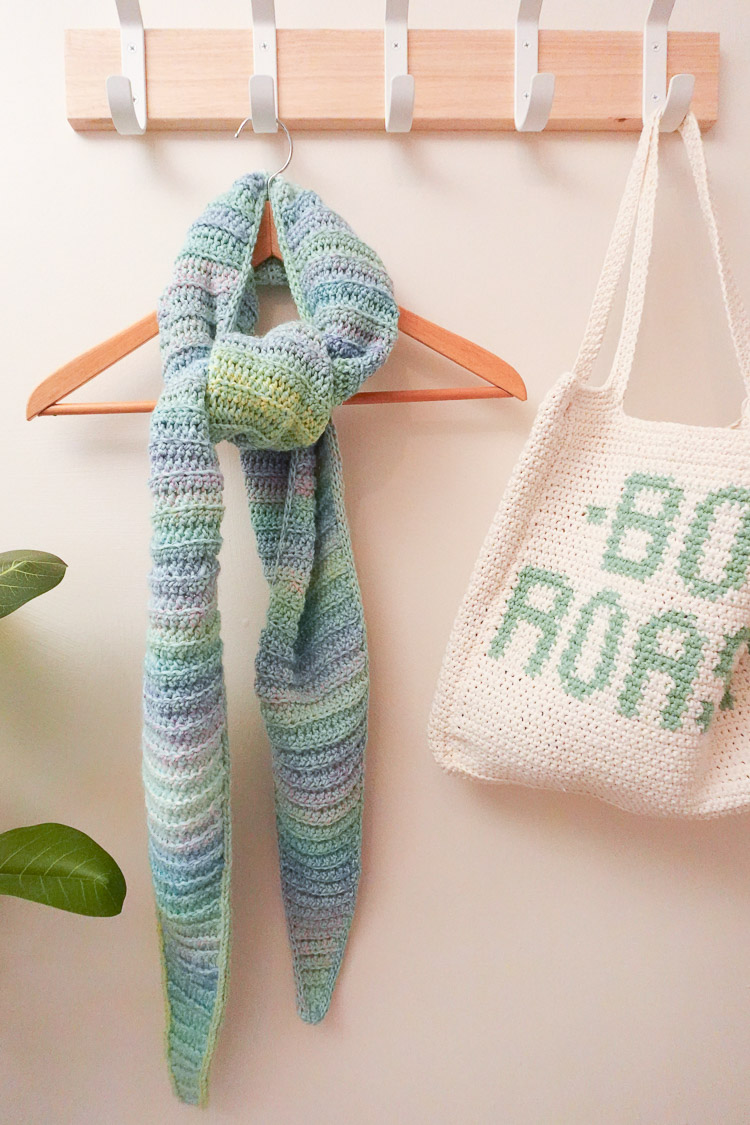
In this blog post we are going to cover all the crochet terms you need to know!

Once you start dabbling in the world of crochet, you’ll probably notice pretty quickly that it has a language of its own.
Between all the abbreviations and all the slang and lingo, it can be super confusing. Patterns are full of shorthand abbreviations, everyone in the crochet community is chatting about frogging their WIP, annoyed about another yarn barf and playing games of yarn chicken!
How is a beginner supposed to know what any of that means. So if that didn’t make any sense to you, no worries! You’re in the right place!
We’ll be covering all the crochet terms, abbreviations, slang, and lingo that you’re going to encounter the most when settling into your new crochet hobby. These are all things I typically either say or hear on daily basis. Once you get yourself familiar with the language, you’ll be all set!
Grab the free cheat sheet! I put all the terms, abbreviations, and the lingo from this post into a pretty printable sheet you can download and keep in your project bag. Get your free crochet cheat sheet here!

A quick note before we get started: everything in this post uses US crochet terminology. US and UK terms are different so it’s important to note! More on that a little later…
Prefer To Watch?
I made a video version of this entire blog post! To watch, click on the play button below:
Common Crochet Abbreviations List
Here’s the master list of common crochet abbreviations for quick reference. If you keep on scrolling, you’ll see the descriptions for each!
| Abbreviation | What It Means |
|---|---|
| BLO | Back loop only |
| BP | Back post |
| CC | Contrasting color |
| ch | Chain |
| dc | Double crochet |
| dec | Decrease |
| FLO | Front loop only |
| FP | Front post |
| hdc | Half double crochet |
| inc | Increase |
| inv dec | Invisible decrease |
| MC | Main color |
| rep | Repeat |
| rnd | Round |
| RS | Right side |
| sc | Single crochet |
| sk | Skip |
| sl st | Slip stitch |
| sp | Space |
| st / sts | Stitch / stitches |
| tog | Together (as in sc2tog) |
| tr | Treble (triple) crochet |
| WS | Wrong side |
| yo | Yarn over |
Basic Crochet Stitch Abbreviations
These are the foundation. Any pattern you come across will be comprised of some combination of these six stitches, so this is the place to start!
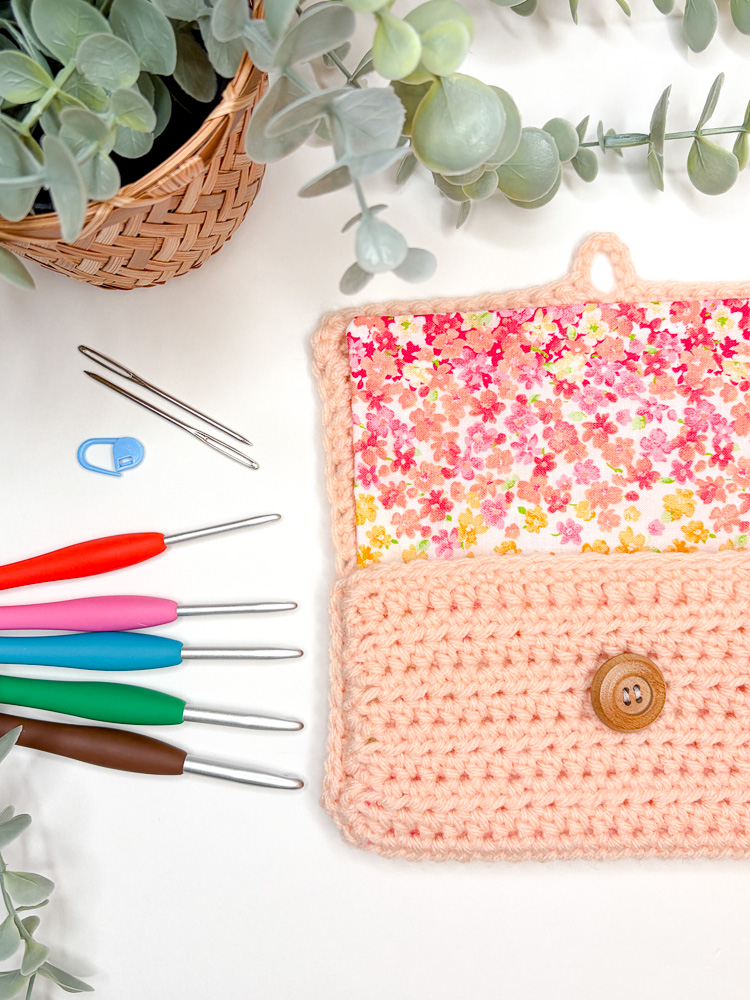
I have full video tutorials walking you through each of these stitches, so once you’ve got the terminology down, feel free to jump into those and learn the skill as you come across them.
Chain (ch)
This is the first thing you’re going to learn when you start crocheting, and it’s probably the most challenging at first. Getting even tension when chaining takes practice. But once you get it, I promise it is smooth sailing from there.
Single crochet (sc)
A short and dense stitch, and usually the first stitch you’ll learn after the chain. Because it’s short and tight, it makes a sturdy fabric! It’s great for things like dishcloths, baskets, and amigurumi.
Half double crochet (hdc)
This stitch is probably my absolute favorite one. I love the density of it, and it’s just a little bit taller than a single crochet so it works up faster than both a single crochet and double crochet. It also tends to have a really lovely drape. It’s a good one, and I can’t wait for you to learn it!
Double crochet (dc)
Taller than a hdc, it works up quickly, and it’s used in lots of patterns. Also a really great stitch.
Treble crochet / also called triple crochet (tr)
The tallest of the basic stitches. You’ll see it written both ways, as treble and triple are two spellings of the same word, and both abbreviate to tr.
Slip stitch (sl st)
A very easy but very important skill. There’s a lot you can do with slip stitches, but when you’re first learning, chances are you’ll use one to add a little finishing touch to your work, or to slip stitch before you fasten off.
US vs UK Crochet Terms
US and UK crochet terms are different so it’s super important to make sure you know the distinction! Any pattern you’re following should tell you if they are using US or UK terms.

To keep things brief, the UK terms are bumped up one name from US terms. So for example, a US single crochet is called a double crochet in the UK. A US half double crochet is a half treble in the UK. A US double crochet is a treble in the UK. And what we call a treble in the US is a double treble in the UK.
So if you’re following a US pattern but reading it as UK terminology, or the other way around, you’re going to come out with something that looks pretty different from what you expected.
But as I said before, the good news is that most patterns and tutorials will tell you right up front whether they’re written in US or UK terms, so it’s an easy thing to check before you start.
I wrote a separate post on this with conversion charts, how to spot which terminology a pattern is using, and hook size conversions too. [Coming soon!]
Abbreviations for Shaping (Increases & Decreases)
These are the abbreviations that add shape to your crochet, and they’re how you can create baskets, hats, sweaters, mittens and lots of other things that have different shapes!
Increase (inc)
To increase in crochet, you’re typically putting two or more stitches into one stitch. The extra stitch adds to your total stitch count and will make your crochet larger.
Decrease (dec)
To decrease, you’re crocheting multiple stitches together to reduce your overall stitch count.
You’ll likely see more variation in the abbreviations for decreasing than for increasing (at least in a lot of the patterns I write). Here are the two most common ways you’ll see it written:
Invisible decrease (inv dec)
A cleaner looking decrease that’s especially popular in amigurumi, because it doesn’t leave a visible bump. I have a tutorial showing you exactly how to do it.
2tog (sc2tog, hdc2tog, dc2tog)
Another way you’ll see a decrease written is with the stitch name in front of “2tog.” So sc2tog means single crochet two stitches together.
Basically, whatever stitch you’re working, the pattern will say a “2tog” on the end of it to tell you to crochet those two stitches together. So you might see it written as hdc2tog, dct2tog. It’s the same thing but different stitches.
Abbreviations for Stitch Placment
These abbreviations tell you where to put your stitches. I included the four below because they create two different kinds of ribbing and ribbing is huge in crochet! You’ll see it in hat brims, glove and mitten cuffs, sweater cuffs, necklines, sweater hems and more!
Back loop only (blo)
This is when you work into the back loop only of a stitch, instead of both loops like usual.
Don’t worry if that sounds confusing now! I have a tutorial walking you through the whole thing. But when you work in the back loop only on a flat project, flipping your work back and forth as you go, it creates a really beautiful horizontal ribbing as you crochet your rows. You’ll see this in a lot of projects I’ve made over the years. It makes a gorgeous fabric. Like this Boysenberry Shawl!
Front loop only (flo)
FLO is similar, but just a different loop. There are lots of reasons to work in the front loop or back loop besides ribbing, but especially as a beginner, if a pattern has you working in the blo, it’s probably creating ribbing.
Most of the time the stitch abbreviation comes first, then the placement. So you’ll see things like hdcblo (half double crochet in the back loop only) or scblo (single crochet in the back loop only). It tells you which stitch to make and where to put it.
Front Post & Back Post (fp & bp)
Instead of working into the top of a stitch, you work around the post (or the the body) of the stitch below.

When you alternate front post and back post stitches, you create vertical ribbing. If you’re familiar with knitting, front post and back post crochet is very similar to a knit one, purl one, or if you’re doing two back post and two front post, that’s like knit two, purl two.
You’ll usually see these combined with a stitch name, like fpdc (front post double crochet) or bpdc (back post double crochet). The FP or BP goes in front of whatever stitch you’re supposed to make.
Both of these techniques create really beautiful variety and texture in your crochet.
Other Crochet Abbreviations
You’ll see these in almost every pattern you come across.
Stitch / stitches (st / sts)
This is the most basic one, and you’ll see it in likely almost every line of pattern.
Skip (sk)
You’ll see this in a lot of patterns, especially anything lacy or openwork.
Round (rnd)
When you crochet, you either work in rows (back and forth) or in rounds. This indicates which round you’re on.
Yarn over (yo)
Any time you wrap your yarn around your hook. It’s something you’ll do in just about every stitch you’ll make.
Space (sp)
A lot of times when you crochet, you’ll create little chain spaces or cluster spaces that you’ll be instructed to crochet into on a later round or row. You’ll often see it written as ch sp for chain space or cluster sp for cluster space.
Main Color / Contrasting Color (MC / CC)
These indicate color work and will be in any pattern that uses more than one color. You’ll have one main color, and possibly several contrasting colors, which you’ll see written as CC1, CC2, CC3 and so on.
Repeat (rep)
In a lot of patterns and stitch techniques, you’ll be repeating directions many times. Rather than writing out “repeat” every single time, it gets shortened to rep.
Right Side / Wrong Side (RS / WS)
The right side of your work is also known as the front, or the outside. The wrong side is the back, or the inside.
Crochet Slang and Lingo
At this point we’ve covered the abbreviations. Now it’s time to get to the fun part, which is all the slang and lingo you’ll hear crocheters talking about on Instagram, Facebook groups, and at your local yarn shop.
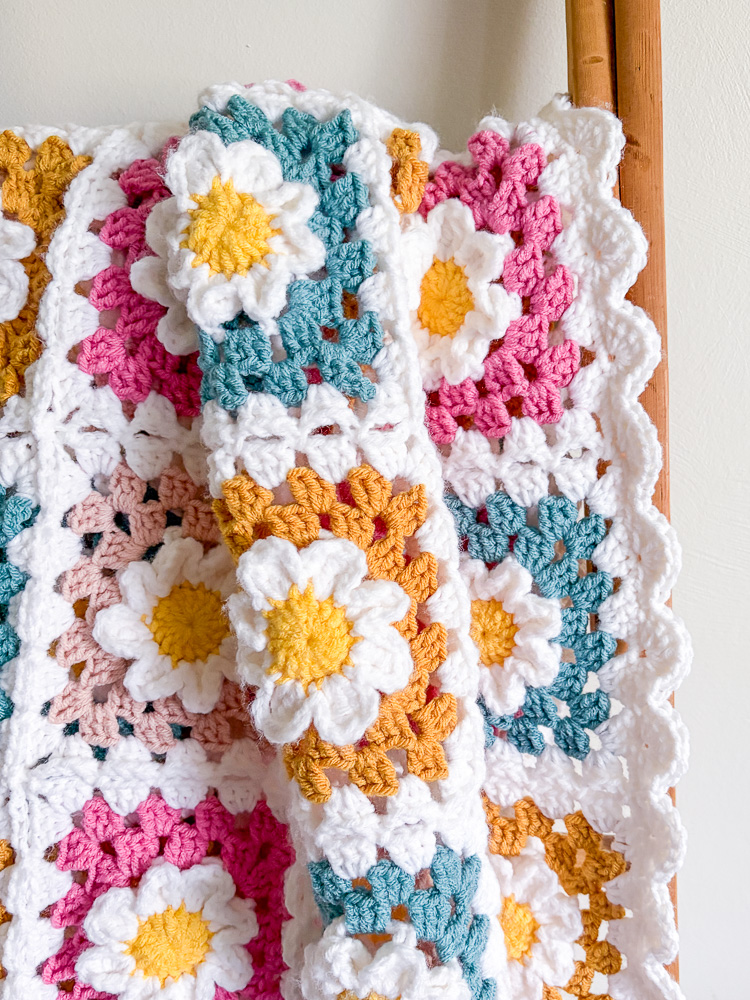
Frog / frogging
This is the one you’re probably going to hear the most, and if you haven’t yet, you will very soon!
All it means is ripping back your work. You’re supposed to think of it as rip it, rip it, rip it! Which, get it? Sounds like a frog!
Yarn barf
A yarn barf is when you reach into the center of a skein to try to work from the center pull, and instead of a neat little yarn end, you pull out a giant clump of tangled yarn. That clump is the yarn barf, and they are super annoying.
CAL & MAL (crochet along & make along)
These two are super similar, so I’m putting them together. Both are when a bunch of makers come together to make a similar thing at the same time.
A crochet along (CAL) is a group of crocheters all working on the same project. They could be following the same pattern, or maybe just the same category of pattern. A make along (MAL) is usually a little broader, often bringing knitters and crocheters together to make the same kind of thing, such as everyone’s making socks, or scarves, or whatever it might be.
Both are a lot of fun, and they’re a really great way to make friends in the crochet community.
FO, UFO, WIP (finished object, unfinished object, WIP)
Let’s group these three, because they’re all about where a project stands.
An FO is a finished object. This is a completed crochet project.
A UFO is an unfinished object. Technically it’s a project that’s in progress, but the way I categorize it, a UFO is lost and forgotten. It’s somewhere at the bottom of the closet, not in your active project basket, and you’ve sort of forgotten about it.
A WIP is a work in progress. So technically a UFO is a WIP, but in my mind a WIP is whatever you’re actively making right now. It’s the thing you’re working on, or at least the thing you have in the back of your mind that you’re working on. A UFO is the one that got lost and forgotten and might turn up again someday.
LYS (local yarn shop or store)
Your local yarn shop or local yarn store. It’s so important to shop local whenever we can, so if you’ve got an LYS in your area, be sure to give them a visit!
Stash
When you hear a crocheter talking about their stash, they’re usually referring to their yarn, though it can also cover hooks, notions, and tools. Basically everything you’ve collected over the years for your crochet hobby.
A lot of people use it to mean yarn specifically, but when I talk about my stash, I like to include my tools and my hooks too. To me, stash is everything I’ve accumulated that has to do with crochet.
De-stash
De-stashing is rehoming yarn, hooks, and things you don’t need anymore. Whether that means… donating it, giving it to a friend, selling it, or whatever works for you!
It’s really important to do this from time to time, and to give yourself permission to do it. As you crochet, you’ll collect yarn, hooks, and a lot of things that will just keeps building up. Finding a new home for the things that aren’t inspiring you anymore, or that are starting to make you feel overwhelmed is part of enjoying this hobby long term.
Stash buster
A stash buster is a project you can make using your existing yarn stash, without going out and buying anything new.
Sometimes that means a project that only takes a tiny bit of yarn, like a scrunchie. Or it could be a bigger project that’s meant to look scrappy with lots of colors. Such as a scrappy granny square or granny stripe blanket.
Yarn chicken
Yarn chicken is when you’re getting close to the end of your yarn ball, and at the same time you’re getting close to the end of your pattern, and you have no idea which one is going to come first.
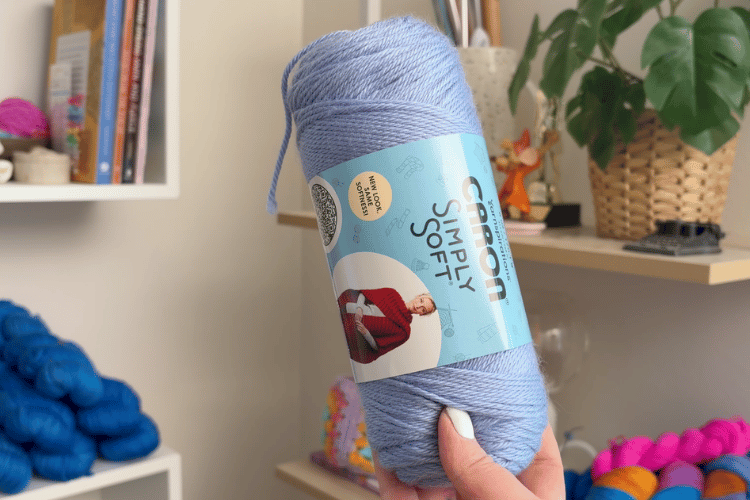
Are you going to run out? Are you not? This can be super suspenseful! I played a super high stakes game of yarn chicken here, if you want to see how it turned out!
JAYGO (join as you go)
This stands for join as you go, and it’s one of the techniques you can use to join granny squares together as you make them, rather than making a big pile and seaming them all at the end.
I absolutely love this technique. It’s super fun, it saves you from a giant assembly session at the end, and I have multiple tutorials on it.
C2C (corner to corner)
This one is more of a technique than a piece of slang, and I didn’t know where else to put it. But you need to know about it!
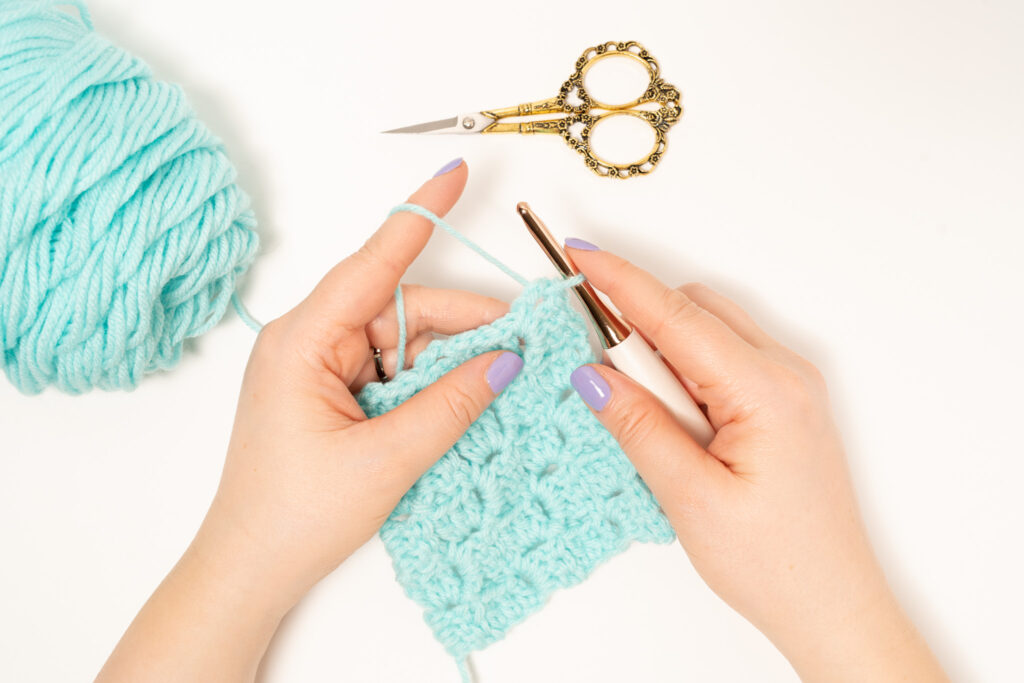
C2C stands for corner to corner, and it’s a way of crocheting where you work diagonally across your project. The best part is that you can take basically any pixelated image and turn it into crochet. It’s a super fun technique, and there are so many great patterns out there for it.
Yarn bomb / yarn bombing
I feel like I haven’t heard this one in a while, but it’s an important one to know.
Yarn bombing is when something in public gets wrapped in something crocheted or knitted. People will crochet around a tree trunk, or cover a park bench, or wrap a bike rack. It’s public art made of yarn. However, can be bad for the environment (if it’s left to rot, break into bits and become trash).
Crochet Terms Frequently Asked Questions
Do I need to memorize all of these?
No, not at all! You pick them up as you run into them in patterns. That’s why I made the printable cheat sheet so you can keep it in your project bag and glance at it when you need it.
What does BLO mean in crochet?
BLO stands for back loop only. It means you work your stitch into just the back loop of the stitch below, rather than both loops. It’s most commonly used to create horizontal ribbing.
What does frogging mean?
Frogging means ripping out your crochet work. The name comes from the sound of “rip it, rip it” and sounds like a frog.
What’s the difference between a WIP and a UFO?
A WIP is a work in progress you’re actively making. A UFO is an unfinished object that’s been abandoned. It’s technically still in progress, but realistically it’s lost at the bottom of a closet.
Are US and UK crochet terms really that different?
Yes, they are! The names overlap but refer to different stitches, so following a UK pattern as though it were US terms will give you a very different result. [Here’s my full conversion chart.]
Is treble crochet the same as triple crochet?
Yes! Both are abbreviated as tr.
You Should Now Be Well On Your Way
There are of course more abbreviations and terms and slang out there, but these are the big ones I hear and use on a daily basis. Once you’ve got these down, you’ll be able to read a pattern and know what people are talking about in the crochet community!
What did I miss? Let me know! I love hearing which terms confused you most!
🧶 Don’t forget your free cheat sheet! All the terms, abbreviations, and lingo from this post, in a printable sheet made just for you. Download it here.
Happy crocheting! 💕